
MARKET INTELLIGENCE
Deep-dive analysis on the evolution of cryogenic logistics and global LNG infrastructure.
Industrial Energy Logistics is shifting. In this executive journal, AMALPHI analyzes the changing landscape of industrial energy logistics, from the thermodynamics of cryogenic transport to the financial strategy of virtual pipelines. Discover how 2026 is redefining energy security.
06THE 186-DAY BREAKTHROUGH: DECOUPLING LNG FROM THE CLOCK
PUBLISHED: FEB 2026 | BY CHRISTOS PAPADAKIS
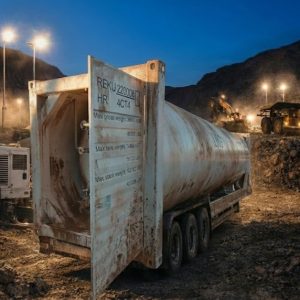
For decades, the 30-day boil-off limit was a hard ceiling for off-grid LNG. AMALPHI is breaking this barrier with next-generation ISO tanks that provide a verified 186+ day holding time. By extending thermal performance by 600%, we have turned transport vessels into Static Strategic Reserves. This removes the “evaporation tax” for remote mining and seasonal industries, making clean energy viable in locations previously thought impossible. We don’t just deliver fuel; we deliver energy security that ignores the calendar.
For remote mining, island, and industrial off-grid projects, the primary logistical bottleneck has never been the truck—it has been the tank.
The Challenge: The “30-Day Window”
For years, LNG logistics faced a hard expiration date. Standard tanks offered a narrow operational window; if fuel wasn’t consumed within 30 days, Boil-Off Gas (BOG) began eroding margins. This physical limitation forced many operators to rely on diesel, simply because diesel does not evaporate during storage.
The Breakthrough: Decoupling Storage from the Clock
We are seeing a fundamental shift in the data. AMALPHI’s new generation of vacuum-insulated ISO tanks has achieved a verified holding time of 186+ DAYS. This is not merely an improvement in insulation; it is a total decoupling of energy storage from the pressure of time.
Strategic Implications for Remote Operations
- SEASONAL STOCKPILING: Sites isolated by winter roads or monsoon seasons can now maintain a 6-month supply without the “evaporation tax.”
- ELIMINATING THE CONSUMPTION FLOOR: Smaller industrial sites that previously could not justify high-frequency deliveries can now utilize LNG as a Static Strategic Reserve.
- TRUE OFF-GRID SECURITY: We are opening immediate viability in sectors that once ruled out LNG due to supply chain fragility.
The logistical tether is cut. If you are analyzing the economics of Diesel vs. LNG for a difficult location, the old boil-off assumptions no longer apply.
05WHY BILLION-DOLLAR LNG TERMINALS ARE BECOMING "STRANDED ASSETS"
PUBLISHED: FEB 2026 | BY CHRISTOS PAPADAKIS
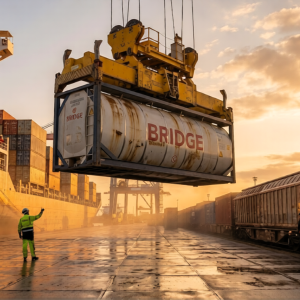
The era of massive, fixed LNG infrastructure is facing a reality check. In my 30 years of international market experience, I have seen that agility beats scale every single time. This article explores the shift toward “Bimodal Resilience”—turning the global container network into a virtual pipeline and why the 40′ ISO tank is the key to decoupling energy from rigid terminals.
For decades, the energy industry has been obsessed with “Fixed Infrastructure.” We built massive, multi-billion dollar import terminals and assumed the world would come to us.
The world has changed.
In my 30 years in international markets, I have seen that agility beats scale every single time. Today, the real winners in the energy transition aren’t those with the biggest pipes—they are those with the most resilient molecules.
This is the era of Bimodal Resilience.
The Death of the “Efficiency Tax”
Every time you move LNG from a large carrier to a truck or coastal vessel, you pay a “tax.” You lose pressure, you lose molecules, and you lose time.
By utilizing the 40′ ISO Tank as a bimodal bridge between Rail and Sea, we are “decoupling” the terminal from the land. We are turning the entire global container network into a Virtual Pipeline.
Why this is the CEO’s Secret Weapon:
— Market Arbitrage: Move gas where the price is highest, not just where the pipe ends.
— Zero-Capex Storage: Your “Inventory on the Move” acts as a rolling buffer.
— Risk Mitigation: If a port is blocked or a rail line is down, your supply isn’t “trapped.” It’s intermodal. It pivots.
The Engineering Reality Check
This isn’t just about logistics; it’s about Thermodynamic Integrity. True Bimodal Resilience requires a thermal envelope verified by ISO 1496-3 standards. In a 50°C rail yard delay, “marketing numbers” don’t keep the pressure down—verified physics do.
We are moving from a world of Static Infrastructure toward a world of Liquid Agility.
The question is:
Is your supply chain built for the 1990s, or is it built for the 2030s?
04THE THERMODYNAMICS OF TRANSPORT: WHY "LAB SPECS" FAIL ON THE ROAD
PUBLISHED: FEB 2026 | BY CHRISTOS PAPADAKIS
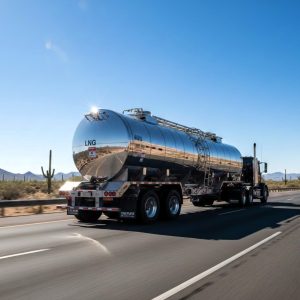
Static ‘holding time’ certifications crumble under real-world thermal stress. From the radiant heat of the Middle East to high-humidity zones, discover why high-mass thermal inertia is the only defense against revenue leakage—and how it transforms transport tanks into zero-loss strategic assets.
In the strategic planning of cryogenic supply chains, “Holding Time” is often treated as a static certification. However, for operations in diverse climate zones, this metric requires a deeper thermodynamic context.
Holding time is not a fixed constant; it is a dynamic variable entirely governed by the Heat In-Leak (HIL) performance under real-world thermal loads.
THE PHYSICS OF REGIONAL STRESS
Admittedly, Standard Multi-Layer Insulation (MLI) systems perform well in controlled environments. However, different regions apply unique thermodynamic stressors that standard foils cannot mitigate:
1. Solar Loading (Latin America & Middle East): In high-radiant corridors like Northern Mexico or the Arabian Gulf, direct solar radiation drives the steel surface temperature above +50 C, regardless of the air temperature.
2. Thermal Conductivity (Southeast Asia): In high-humidity zones like Indonesia or Vietnam, moisture saturation increases the thermal conductivity of the air, accelerating heat transfer even at moderate temperatures.
If the insulation architecture relies solely on vacuum, these regional forces drive a rapid pressure rise. The LNG absorbs this energy, transitioning phase from liquid to gas. Once the safety valve lifts, the asset ceases to be a storage vessel and becomes a source of revenue leakage.
THE MASS VARIABLE
Furthermore, operational data confirms that in these high-stress environments, the most effective countermeasure is Thermal Inertia.
Specifically, the utilization of high-mass inner vessels (9mm thickness) combined with solid-state powder infill creates a thermal buffer. This mass absorbs and dissipates thermal spikes before they can degrade the vacuum integrity.
THE STRATEGIC IMPLICATION: FROM DESERT TO ARCTIC
This engineering provides a dual strategic advantage.
An asset engineered to withstand 186 days of retention in the Sonoran Desert essentially becomes a “Zero-Loss” unit when deployed to Scandinavia or Canada. In cooler climates, the excess thermal capacity transforms the tank from a transport unit into a viable “Winter Storage Asset” for peak-shaving.
True energy security requires hardware that is engineered for the worst-case scenario. If it holds in the desert, it is flawless in the North.
03THE END OF "JUST-IN-TIME" ENERGY: 3 SHIFTS REDEFINING LNG LOGISTICS IN 2026
PUBLISHED: FEB 2026 | BY CHRISTOS PAPADAKIS
The ‘Just-in-Time’ model for industrial energy logistics is dead, replaced by a 2026 priority for strategic on-site security. From off-grid decentralization to the tightening trap of carbon compliance, industrial operators are now forced to choose: infrastructure built for speed, or infrastructure built for long-term stability.
For the last decade, the global energy supply chain was built on speed. The goal was to move product from Terminal A to Plant B as fast as possible to minimize boil-off and storage costs.
But in 2026, the priority has shifted. Managing Directors and Energy Buyers are no longer just asking “How fast?”—they are asking “How secure?”
Here are the three trends currently reshaping the sector:
1. THE SHIFT TO STRATEGIC RESERVES
For example, global grid instability has effectively killed the “Just-in-Time” model. Industrial consumers can no longer rely on tight delivery windows. Consequently, the new requirement is on-site “buffer” storage—the ability to hold 2–3 months of fuel as a hedge against supply shocks. Furthermore, infrastructure that leaks or vents product is no longer a storage solution; it is a liability.
2. THE DECENTRALIZATION OF DEMAND
The biggest growth isn’t happening at the end of a pipeline. It is happening in off-grid mining, remote manufacturing, and island power generation. These users need a “Virtual Pipeline” that mimics the reliability of a fixed pipe—without the massive infrastructure CAPEX.
3. THE “CARBON COMPLIANCE” TRAP
Previously, boil-off used to be a financial nuisance. Now, with tightening methane regulations and carbon audits, it is a compliance risk. “Acceptable loss” is becoming “unacceptable emissions.”
THE BOTTOM LINE: We cannot solve 2026 problems with 2010 hardware. The future belongs to infrastructure that turns LNG from a volatile commodity into a stable, long-term asset.
If you are managing logistics for a remote fleet or industrial plant: Are you building for speed, or are you building for security?
02WHY THE "VIRTUAL PIPELINE" IS THE HIGHEST-ROI MOVE FOR INDUSTRIAL ENERGY IN 2026
PUBLISHED: JAN 2026 | BY CHRISTOS PAPADAKIS
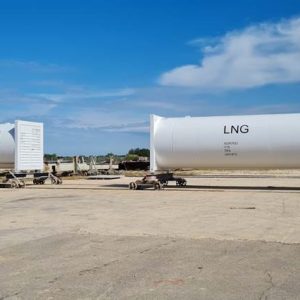
In 2026, LNG is moving from a sustainability initiative to a core economic strategy. By leveraging fuel cost arbitrage and new 180-day cryogenic storage standards, industrial operators are transforming energy from a fixed cost center into a strategic, high-ROI asset.
In the current industrial landscape, “Sustainability” is often discussed as a regulatory burden. But for the Managing Directors and Operations Managers I speak with, the real conversation is about ECONOMICS.
Transitioning from Diesel to a Liquefied Natural Gas (LNG) “Virtual Pipeline” isn’t just a green initiative—it’s a direct injection into the bottom line.
THE ROI BREAKDOWN:
1. FUEL COST ARBITRAGE: Despite market fluctuations, LNG consistently offers a lower cost per energy unit (MMBtu) compared to industrial diesel. For high-output operations, this translates to 20-30% savings in annual fuel spend.
2. REDUCED MAINTENANCE: LNG is a cleaner-burning fuel. Engines and boilers running on gas see significantly less carbon buildup, extending equipment life and reducing “fire drill” maintenance stops.
3. THE STORAGE DELTA: The historical “hidden cost” of LNG was boil-off. If you didn’t use the gas, you lost the money.
Consequently, new cryogenic standards (like the 186-day holding benchmarks we are seeing in 2026) are turning these “Virtual Pipelines” into strategic reserves. Operators can now buy when prices are low, store for months, and use as needed with near-zero product loss.
Ultimately, whether powering a remote mining site or an industrial complex, the data suggests a clear shift: Diesel is becoming a cost center, while stable LNG storage is becoming a strategic asset.
01WHY THE FUTURE OF ENERGY ISN'T ONLY IN PIPELINES
PUBLISHED: JAN 2026 | BY CHRISTOS PAPADAKIS
Businesses are no longer tethered to the grid; they are rethinking their industrial energy logistics where they need it, when they need it. This insight breaks down the ‘Virtual Pipeline’ advantage and why CTT logistics is the new standard for energy independence.
For decades, industrial energy security was defined by physical infrastructure. If your facility wasn’t on the grid or near a major pipeline, your options were limited, expensive, and often carbon-heavy.
In 2026, the game has changed. At AMALPHI, we are seeing a massive shift toward the “Virtual Pipeline.”
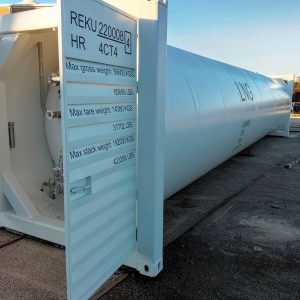
By utilizing CTT Cryo Trans Tech ISO Tanks, businesses are no longer tethered to fixed locations. Whether it’s a remote industrial site, a satellite power plant, or a marine bunkering station, LNG can now be delivered with the same flexibility as a standard shipping container—without the infrastructure CAPEX.
THE AMALPHI + CTT ADVANTAGE:
■ SCALE ON DEMAND: Start small and add tanks as your energy needs grow.
■ GLOBAL REACH: Move LNG via road, rail, or sea without decanting the product.
■ ZERO-LOSS STORAGE: Unlike standard units, CTT tanks act as mobile storage assets, holding pressure for over 180 days.
The “Virtual Pipeline” isn’t just a logistical concept—it’s how the most resilient companies in the world are powering their operations today.
Is your operation still pipeline-dependent? Let’s discuss how CTT logistics can diversify your energy supply.
READY TO SECURE YOUR 2026 ENERGY LOGISTICS?
From ‘Virtual Pipeline’ strategy to complex industrial energy logistics, get direct guidance.